
Have you ever watched your dog shake its head over and over or scratch at its ears without stopping? It is one of those things that is hard to ignore, and for good reason.
Ear infections are one of the most common health problems seen in dogs. They can range from a mild outer ear irritation to a deep inner ear infection that affects balance and hearing.
The good news is that most infections are treatable when caught early.
Knowing what type your dog has, what caused it, and when to see a vet can save your pet from a lot of unnecessary pain.
What Are Dog Ear Infections?
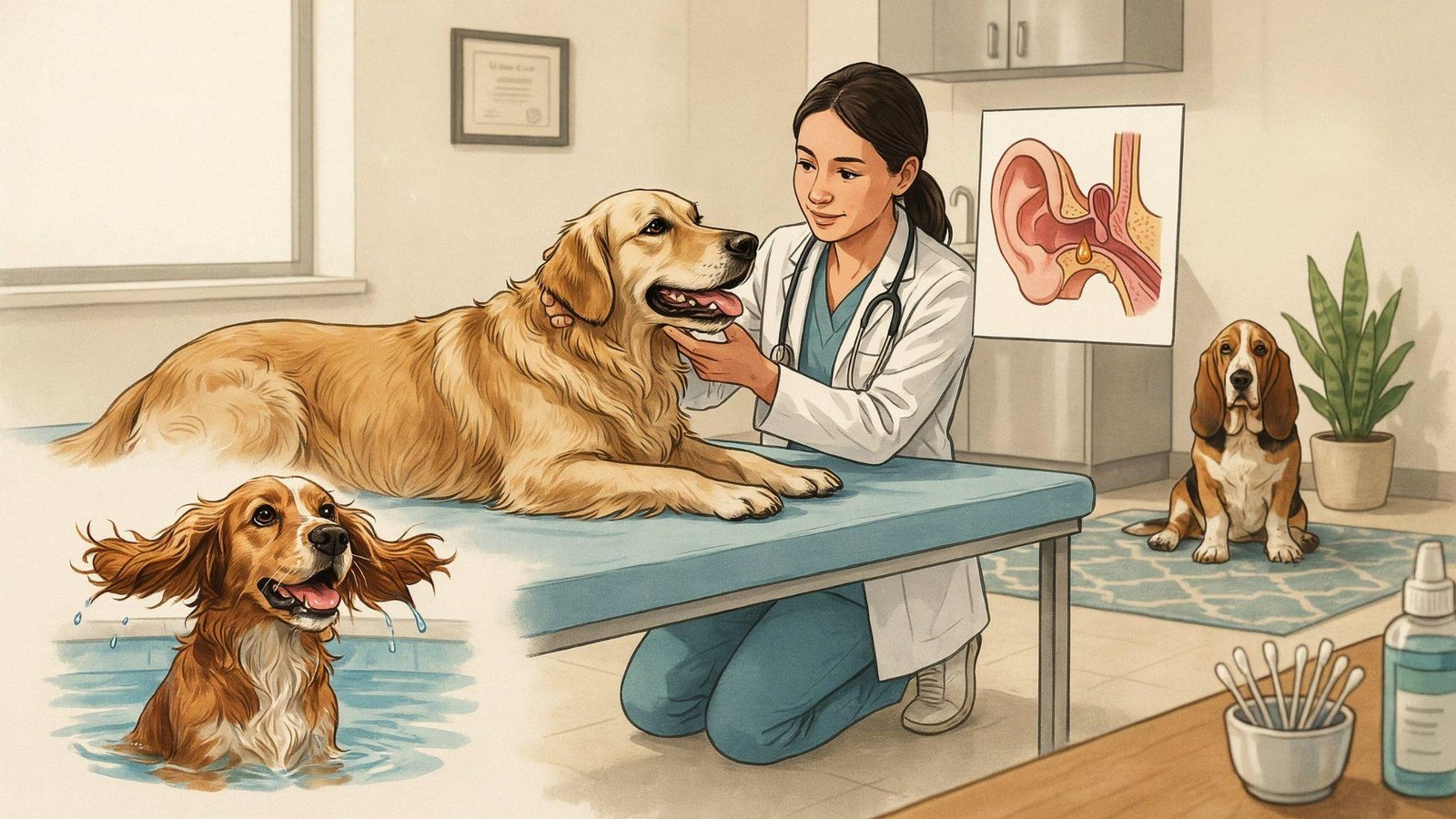
Dog ear infections, known as otitis, are simply inflammation or infection inside the ear.
Dogs are more prone to this than humans because of their L-shaped ear canal, which traps moisture and debris easily.
Certain breeds with floppy ears or dogs that swim often face higher chances of getting an infection.
Catching the problem early makes a big difference. A small infection treated on time stays manageable.
Left unchecked, it can spread deeper and cause serious pain or even hearing loss.
The 3 Main Types of Dog Ear Infections
Dog ear infections are not all the same. Knowing which type your dog has helps you act faster and get the right treatment.
1. Otitis Externa — Outer Ear Infection
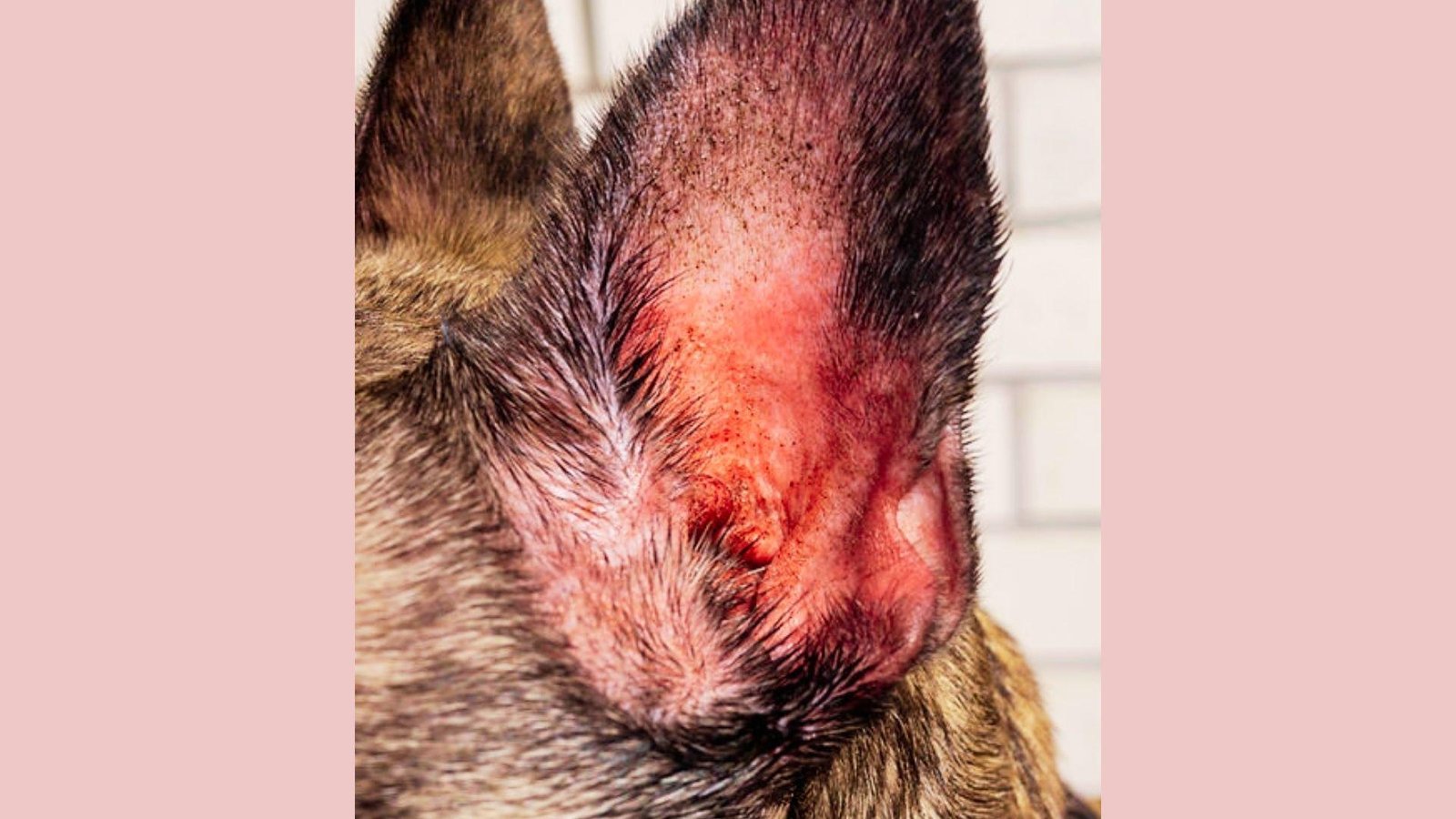
This is the most common type. It affects the outer ear canal and is usually the first sign that something is wrong with your dog's ears.
Symptoms:
- Head shaking frequently
- Scratching or pawing at the ears
- Redness and swelling around the ear
- Dark discharge or crusty buildup
- Unpleasant smell coming from the ear
What causes it: Bacteria or yeast are the usual culprits. Moisture trapped after swimming or bathing creates the perfect setting for infection. Food or environmental allergies also play a role. Ear mites and debris buildup are other common causes.
2. Otitis Media — Middle Ear Infection
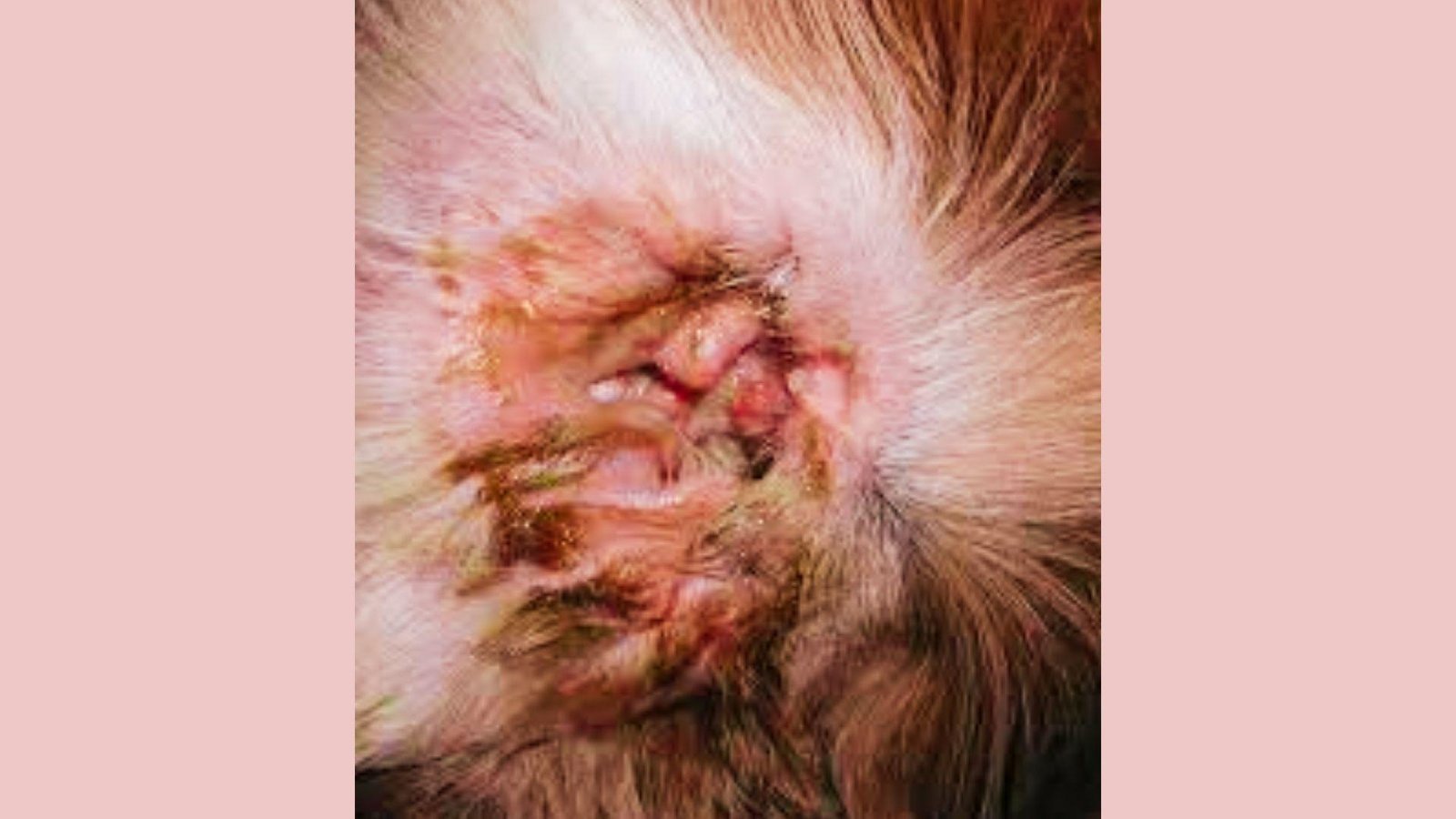
This type goes deeper. It occurs when infection spreads past the eardrum into the middle ear. It is more serious and needs prompt attention.
Symptoms:
- Head tilting to one side
- Loss of balance
- Unusual eye movements (nystagmus)
- Visible signs of ear pain or discomfort
What causes it: Most middle ear infections start as outer ear infections that were not treated in time. Bacteria can spread into deeper ear structures. Long-term inflammation or allergies can also lead to this condition.
3. Otitis Interna — Inner Ear Infection
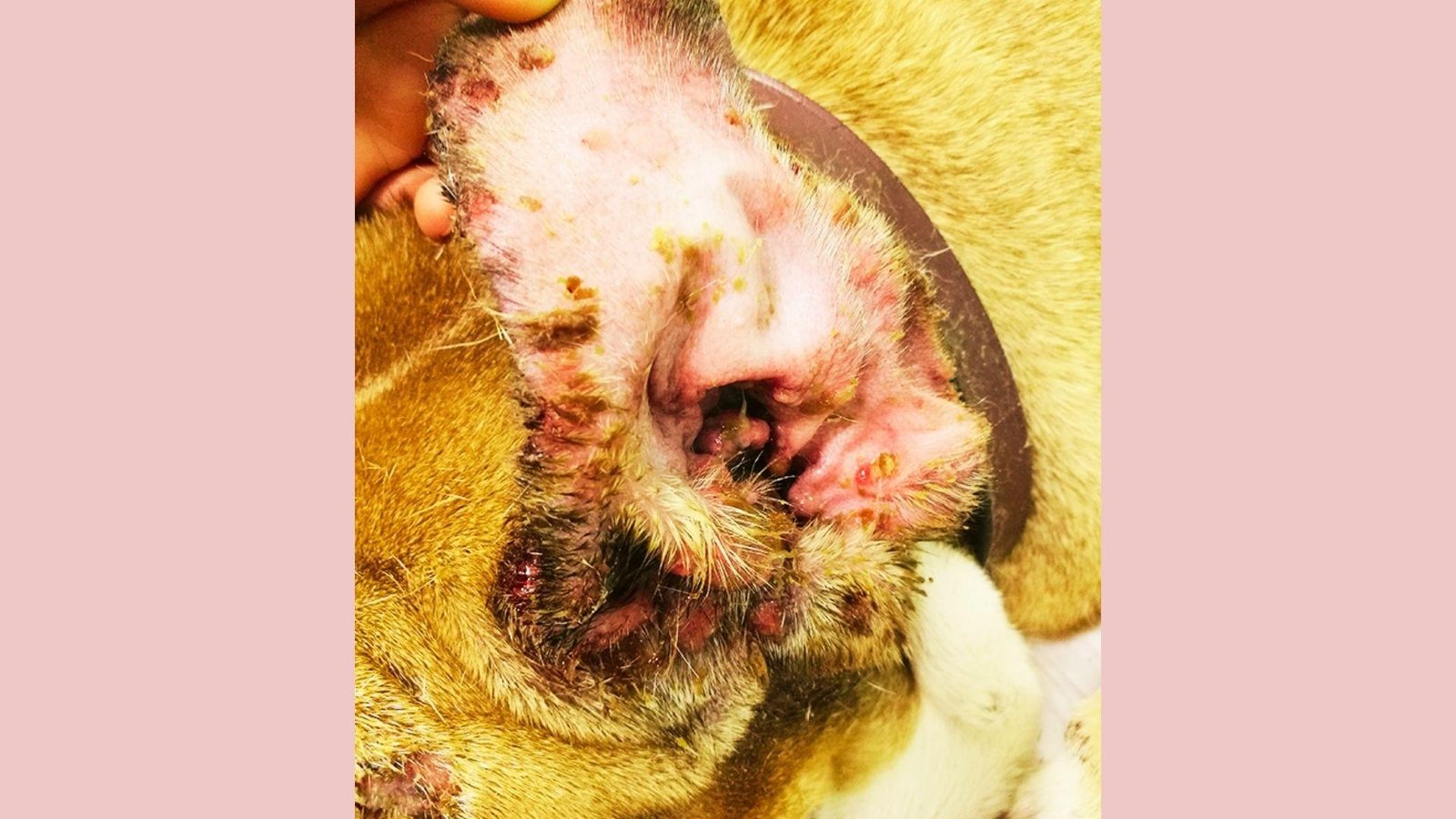
This is the most severe type. It affects the nerves responsible for hearing and balance. Dogs with this condition need immediate veterinary care.
Symptoms:
- Serious loss of balance
- Falling or leaning heavily to one side
- Facial drooping
- Hearing loss
- Difficulty walking in a straight line
What causes it: Inner ear infections usually happen when outer or middle ear infections go untreated for too long. Deep bacterial spread and severe chronic ear disease are the main reasons this condition develops.
Common Causes of Dog Ear Infections
There are several causes of ear infection but the common ones are:
- Bacteria like Staphylococcus and Pseudomonas, along with yeast such as Malassezia, are the most frequent causes of ear infections in dogs. They grow quickly when conditions inside the ear are warm and moist.
- Ear mites are tiny parasites that cause intense itching and irritation. They spread easily between pets living in the same home.
- Allergies to dust, pollen, mold, or certain foods can trigger ongoing skin and ear issues in dogs. These reactions often make the ear canal more vulnerable to infection.
- Dogs with floppy ears are more likely to trap moisture and debris inside the ear. Their L-shaped ear canal also makes it harder for the ear to drain and stay dry naturally.
How Vets Diagnose Ear Infections
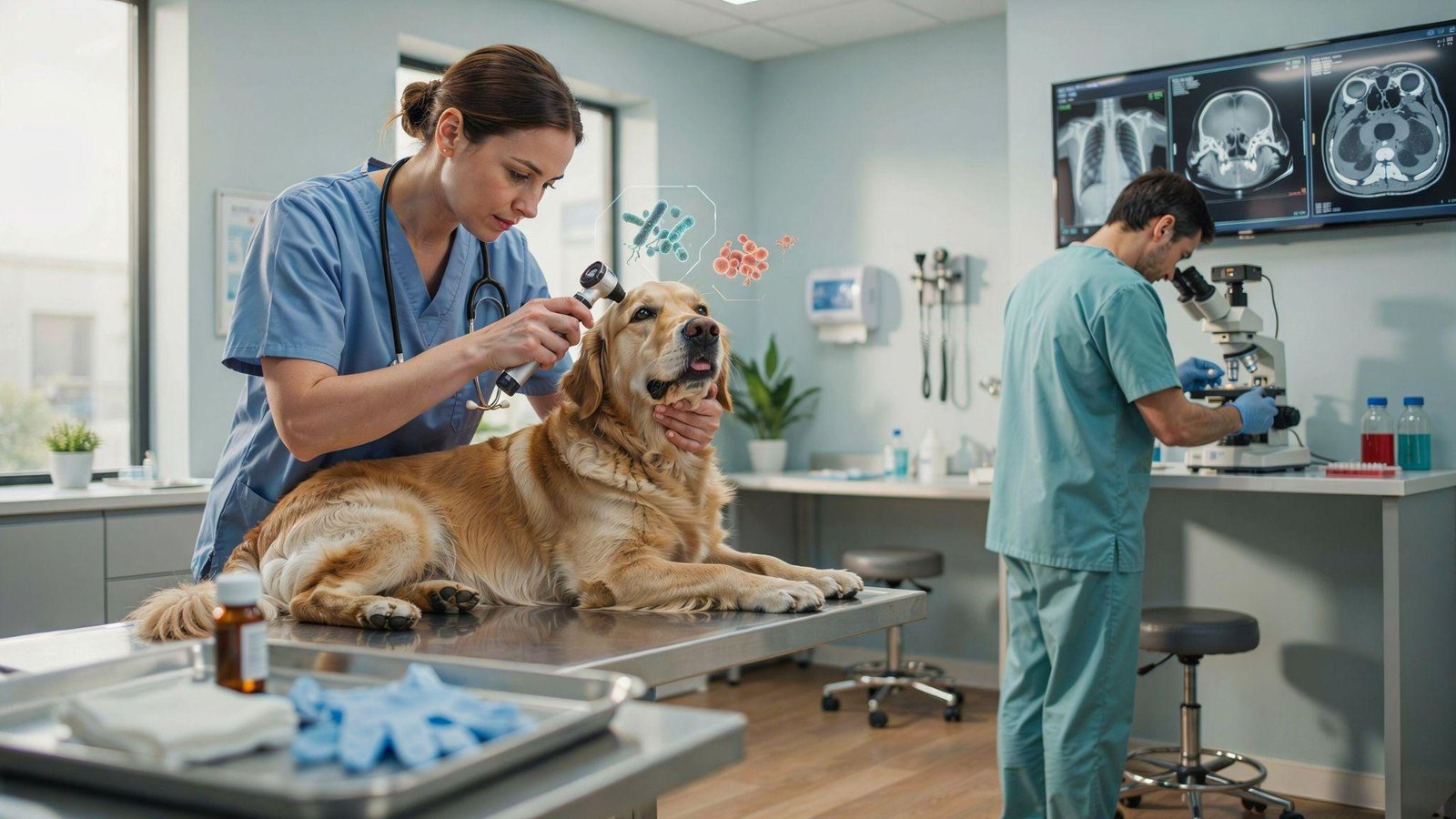
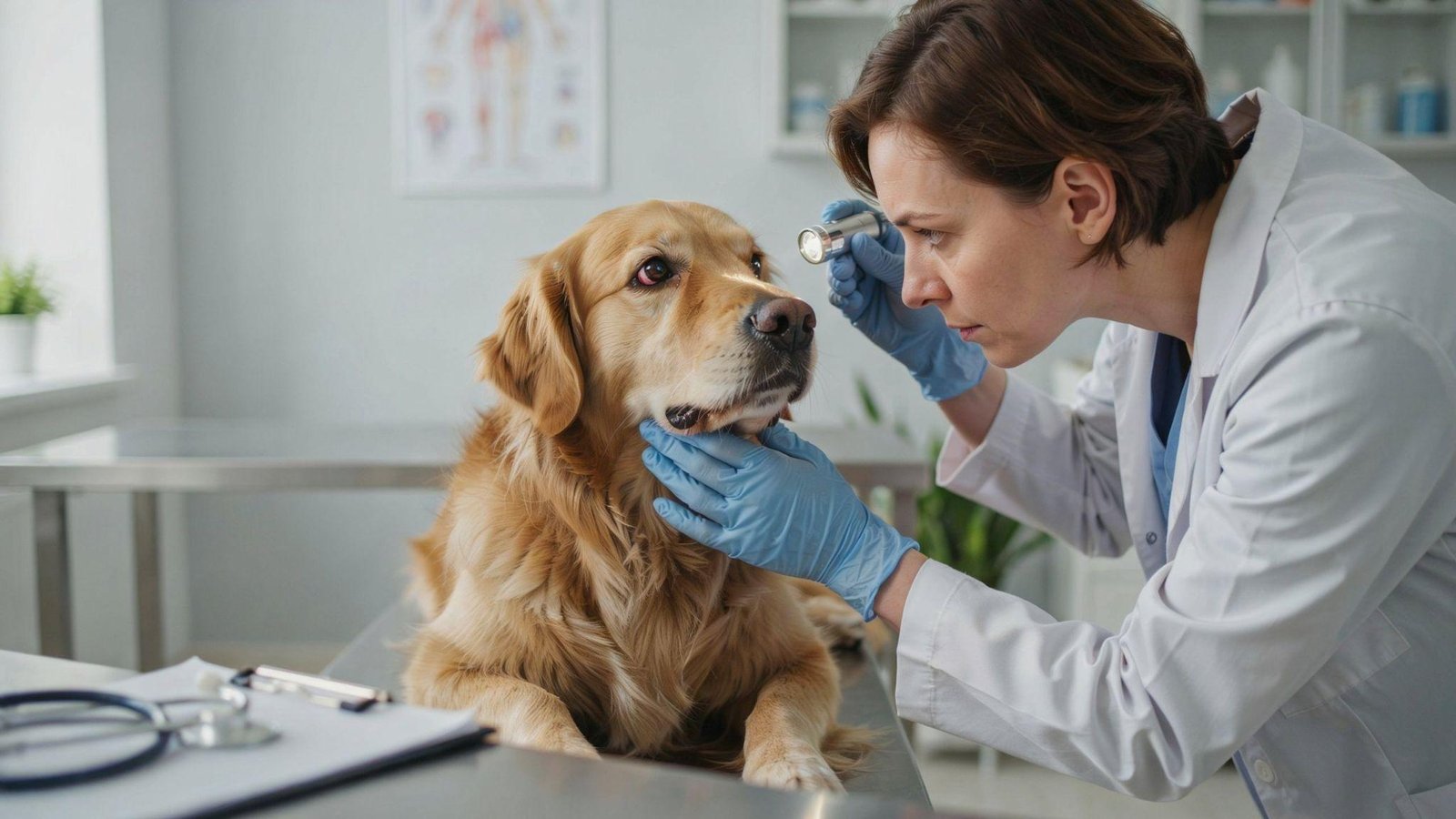
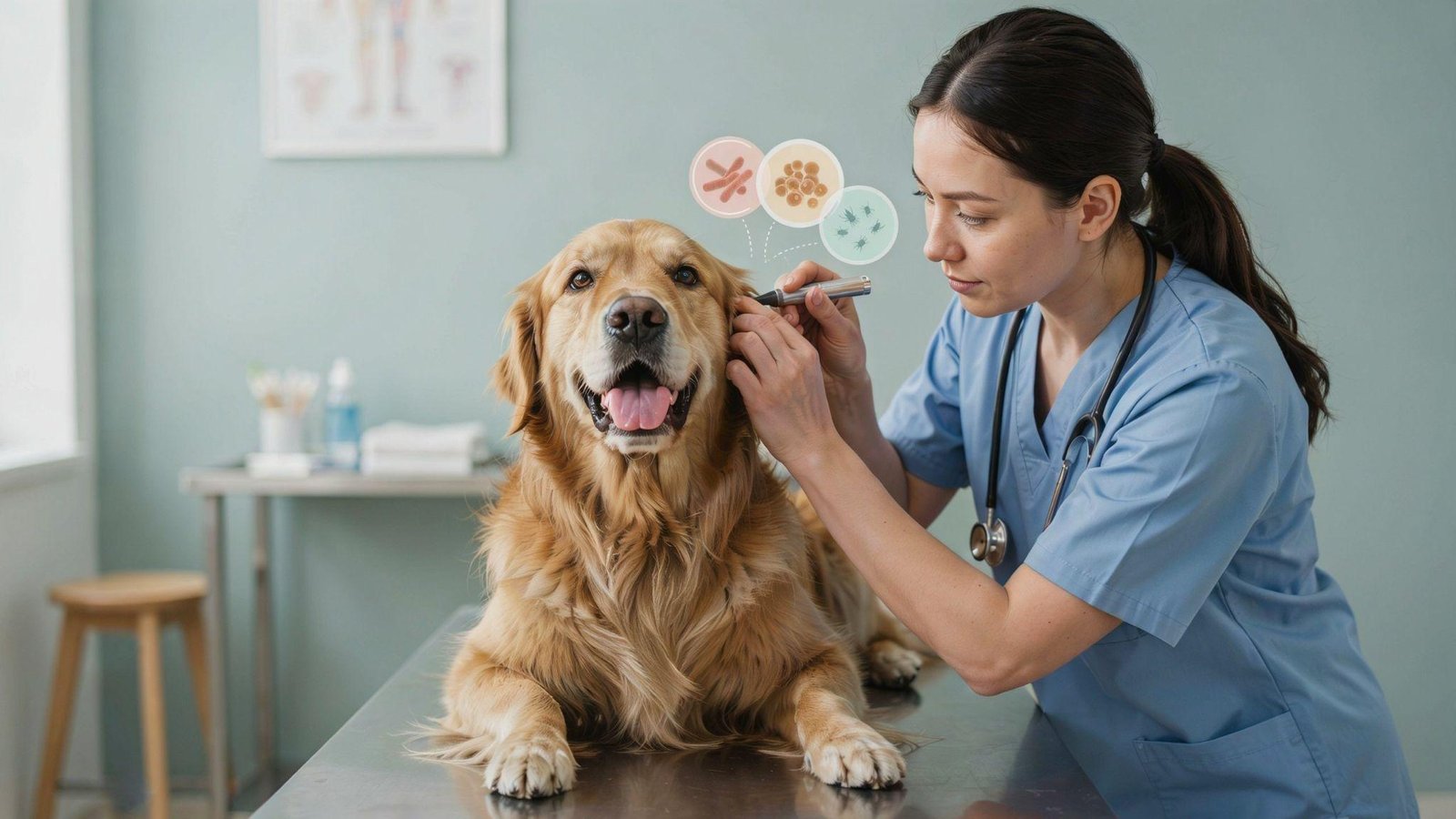
Vets start by looking inside the ear using an otoscope and taking a swab from the canal. The swab is then checked under a microscope to spot bacteria or yeast.
For stubborn or recurring infections, a culture test is done to identify the exact strain causing the problem. This helps the vet choose the most effective treatment.
In serious cases involving the inner ear, imaging tests like X-rays, CT scans, or MRI are used to check how far the infection has spread.
Treatment Options for Dog Ear Infections
The right treatment depends on the type of infection and how far it has progressed.
Topical Treatments
Vets recommend ear cleaning solutions along with antibiotic or antifungal drops to clear the infection. Anti-inflammatory drops help reduce pain and swelling inside the ear canal.
Oral Medications
When the infection is deeper or more serious, oral medications are prescribed. These include antibiotics, antifungal tablets, and steroids to bring down inflammation from the inside.
Surgical Treatment
In rare cases where the infection keeps coming back or does not respond to medication, surgery may be needed. This is usually considered when the ear canal is severely damaged or blocked.
When to See a Vet Immediately
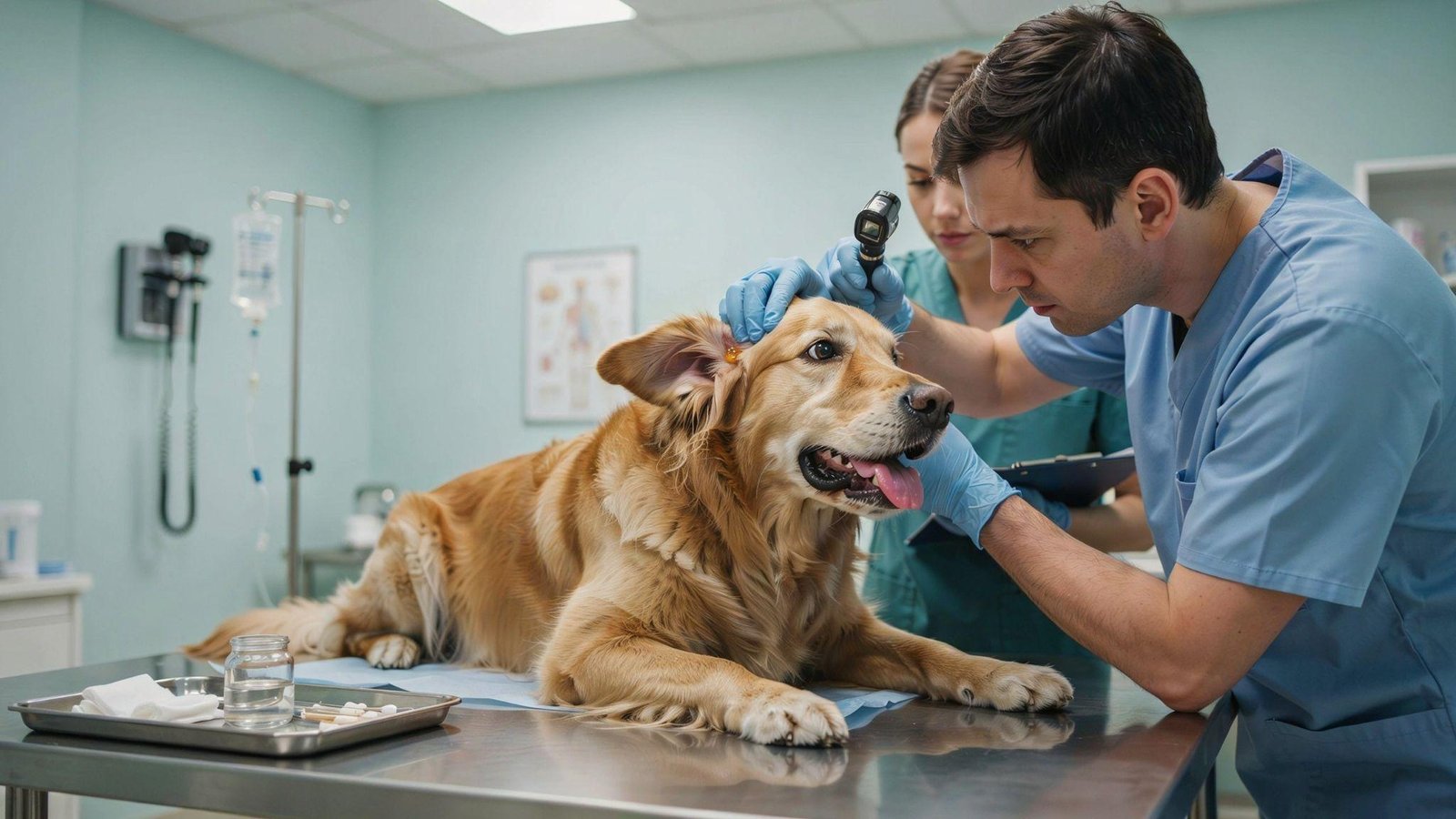
If your dog is crying, showing signs of pain, or tilting its head, do not wait. These are signs the infection may have gone deeper than the outer ear.
Foul-smelling discharge or visible swelling around the ear also needs same-day attention. A bad smell usually means the infection is already advanced.
Any symptoms lasting more than 48 hours should be checked by a vet without delay. Waiting too long can turn a treatable infection into a much bigger problem.
Prevention Tips for Dog Ear Infections
- Clean your dog's ears regularly using a vet-approved solution to remove dirt and buildup. Making this a weekly habit can stop infections before they start.
- Always dry your dog's ears thoroughly after a bath or swim. Leaving moisture inside the canal gives bacteria and yeast a chance to grow.
- If your dog has allergies, work with your vet to keep them under control. Unmanaged allergies are one of the leading reasons ear infections keep coming back.
- Routine vet checkups allow early detection of any changes inside the ear. A quick check during a regular visit can catch problems that are not yet visible.
- Avoid inserting cotton swabs or any objects deep into the ear canal during cleaning. This can push debris further in and cause irritation or damage to the eardrum.
Conclusion
Dog ear infections are painful for your pet and stressful for you. But with the right knowledge, most cases are completely manageable.
Keep up with regular ear cleaning, watch for early signs, and never delay a vet visit when something feels off.
Your dog cannot tell you when something hurts. That responsibility falls on you as a pet owner, and staying informed is the best thing you can do for them.
Noticed something unusual with your dog's ears? Book a vet appointment today and catch it early.
Frequently Asked Questions
What are the most common types of dog ear infections?
The three main types are otitis externa, otitis media, and otitis interna. They affect the outer, middle, and inner ear respectively, with each type varying in severity.
How do I know if my dog has an ear infection?
Watch for signs like head shaking, scratching at the ears, redness, dark discharge, or a bad smell. If any of these last more than a day or two, get your dog checked by a vet.
Can dog ear infections go away on their own?
Most ear infections do not clear up without treatment. Leaving them untreated can cause the infection to spread deeper and lead to more serious complications.
Are certain dog breeds more likely to get ear infections?
Yes, breeds like Basset Hounds, Beagles, Labradoodles, and Cockapoos are more prone due to their long or floppy ears. These ear shapes trap moisture and reduce airflow, making infections more likely.
How can I prevent ear infections in my dog?
Clean your dog's ears regularly with a vet-approved solution and always dry them after swimming or bathing. Routine vet visits also help catch early signs before they turn into a bigger problem.